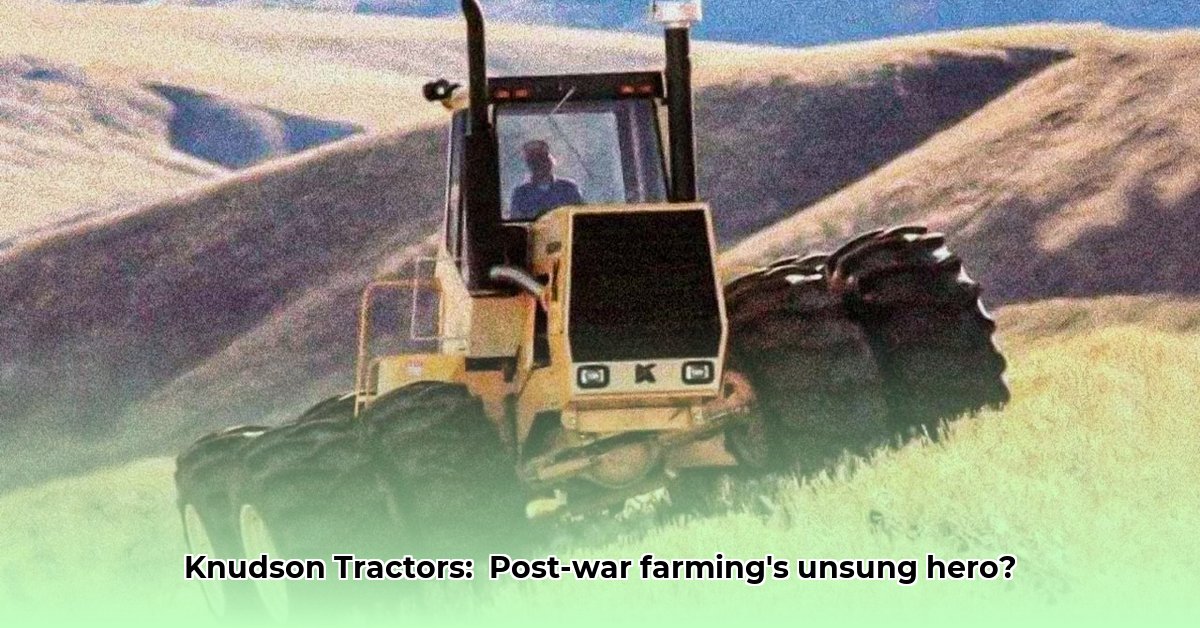
Knudson Tractors: A Post-War Farming Revolution
The post-World War II era witnessed a surge in American agriculture, a nation hungry for food and fueled by innovative spirits. Farmers, especially those with smaller landholdings, desperately needed reliable, affordable machinery. This fertile ground birthed companies like Knudson Tractors, a name that, while not a household giant, carved a significant niche. Their story is one of clever design, hardworking individuals, and tractors perfectly tailored to the needs of a changing nation. Did you know that early models were celebrated for their surprisingly simple design, making maintenance a breeze for cash-strapped farmers? For more pictures of antique tractors, see this great resource.
More Than Metal and Gears: Forging a Farming Legend
Emerging in the late 1940s or early 1950s (precise records remain elusive, adding to the mystique), Knudson Tractors was possibly the brainchild of Lars Knudson, perhaps in collaboration with Mary Johnson. Their vision: dependable tractors that wouldn't break the bank. Early models, like the KT-400 (rumored to boast around 40 horsepower), weren't just powerful; they were practical. Their simplicity was revolutionary, contrasting sharply with the complex machines of the time. These weren't delicate; they were built to endure the harsh realities of daily field work. Later models, such as the KT-600 (estimated at 60 horsepower), further demonstrated their commitment to improvement, showcasing their responsiveness to evolving farming demands. This wasn't a sudden leap, rather a steady climb towards greater efficiency—a testament to their dedication to their customers. Wasn't this focus on practicality a key element of their success?
Innovation Beyond Brute Strength: More Than Just Horsepower
Knudson Tractors didn't simply focus on power. They invested heavily in engine design improvements, refined hydraulic systems, and implemented live power take-offs (PTOs) – crucial advancements that dramatically improved performance and versatility. These weren't mere cosmetic upgrades; they were strategic enhancements directly addressing farmers' real-world challenges. What truly set Knudson apart was their remarkable pragmatism. They even developed specialized tractors, such as the “Hillside Tractor,” specifically engineered for challenging hilly terrains. This targeted approach showcased a deep understanding of their diverse customer base. Wasn’t this dedication to solving specific problems a significant factor in their success?
A Legacy Forged in the Fields: More Than Just Numbers
While precise sales figures remain elusive—a common hurdle when researching smaller, independent companies of that era—Knudson Tractors’ impact is undeniable. Their legacy isn't confined to dusty ledgers; it lives on in countless farmers' stories. Tales abound of their exceptional reliability and efficiency, painting a vivid picture of these tractors as steadfast workhorses, quietly transforming landscapes and lives. They weren't flashy, but they were dependable—in farming, dependability is priceless. How did this commitment to reliability influence their reputation amongst farmers?
Lessons from the Past, Seeds for the Future
Although Knudson Tractors are no longer in production, their story offers valuable lessons for modern agricultural equipment manufacturers. Their unwavering focus on practicality and adaptability remains highly relevant. What can we learn from their success? Perhaps a renewed emphasis on building durable, user-friendly machines, prioritizing robustness and ease of maintenance. Perhaps rediscovering the importance of affordability without compromising quality—a balance Knudson Tractors skillfully achieved. Their legacy underscores the need to re-examine farmers' needs and center their perspectives in the development of new technology. Their customer-centric approach was instrumental to their success—a lesson that continues to resonate.
More Than a Machine: A Symbol of American Ingenuity
The saga of Knudson Tractors offers a compelling narrative of resilience, tenacity, and insightful understanding of the agricultural world. Even with limited historical data, their lasting influence is clear. Their legacy is not merely about dependable machinery; it's a tribute to the human spirit of innovation and the profound connection between human ingenuity and the land. It's a reminder that significant impact often stems not from market domination, but from steadfast dedication to the communities served. The story of Knudson Tractors serves as a powerful testament to this truth.